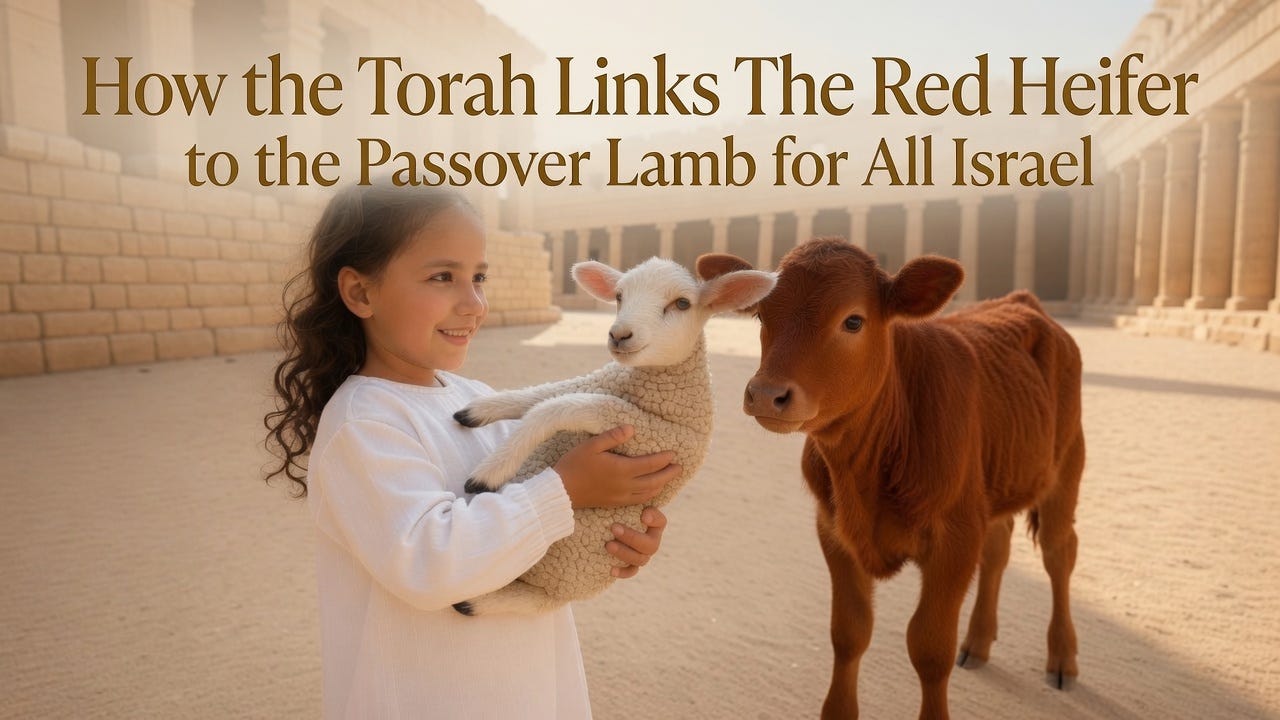
The search for a flawless red heifer has captured attention in recent months as dedicated teams examine candidates with care. At the same time, Passover draws near, bringing to mind the lamb that played a central role in the deliverance from Egypt. These two animals, the parah adumah whose ashes bring purification and the korban Pesach whose blood marked homes for protection, connect in a remarkable way in the Torah. The Hebrew text weaves them into a beautiful sequence designed for all Israel, revealing layers of precision and care in God’s instructions for His people.
How the Two Commandments Address the Same People
How does the Torah link the red heifer to the Passover lamb? The answer comes through the shared address and practical harmony that prepare the entire congregation for service and remembrance.
The command for the red heifer opens in Numbers 19 with direct words to the nation. “Speak to the children of Israel and they shall take to you a completely red cow without blemish, upon which no yoke has come” (Bamidbar 19:2). The Hebrew daber el bnei Yisrael calls upon the descendants of Jacob. This parah adumah is led outside the camp, slaughtered, and burned completely with cedar wood, hyssop, and scarlet thread. The ashes, mixed with living water, create the special mixture for sprinkling. This process addresses corpse tumah, the impurity that comes from contact with a dead human body or grave. Contact with a corpse renders a person unclean in a severe way that lasts seven days and requires specific purification rites before one can approach sacred things. The parah adumah thus removes this barrier of death so the people can stand ready before God, with the full process completed through two separate sprinklings on the third and seventh days.
Preparation Enables the Passover Observance
This preparation flows naturally into the Passover instructions. Exodus 12 directs the selection of the lamb. “Tell all the congregation of Israel that on the tenth day of this month they shall take to them every man a lamb according to their fathers’ houses, a lamb for a household” (Shemot 12:3). The Hebrew kol adat Yisrael speaks to the full assembled community. Each household selects its animal four days ahead. On the fourteenth at twilight they slaughter it. The blood goes on the doorposts and lintel as a sign. That night the family eats the roasted meat with matzah and bitter herbs. The statute includes clear details for the meal. “This is the ordinance of the Passover” (Shemot 12:43), ensuring the observance remains tied to the original deliverance.
Later Directions Shift Blood to the Altar
After the original night in Egypt, the Passover offering became a national sacrifice. The blood, rather than being applied to home doorposts, is dashed on the altar by the priests in the central sanctuary. Deuteronomy 16 commands, “You shall sacrifice the Passover offering to the Lord your God from the flock and the herd, in the place which the Lord shall choose to cause His name to dwell there” (Devarim 16:2). The meat is still eaten by the registered groups, but the entire observance becomes a national pilgrimage festival for all Israel. This centralized form requires the highest level of purity across the people. Here the red heifer plays its essential supporting role on a national scale.
The Harmony of These Statutes
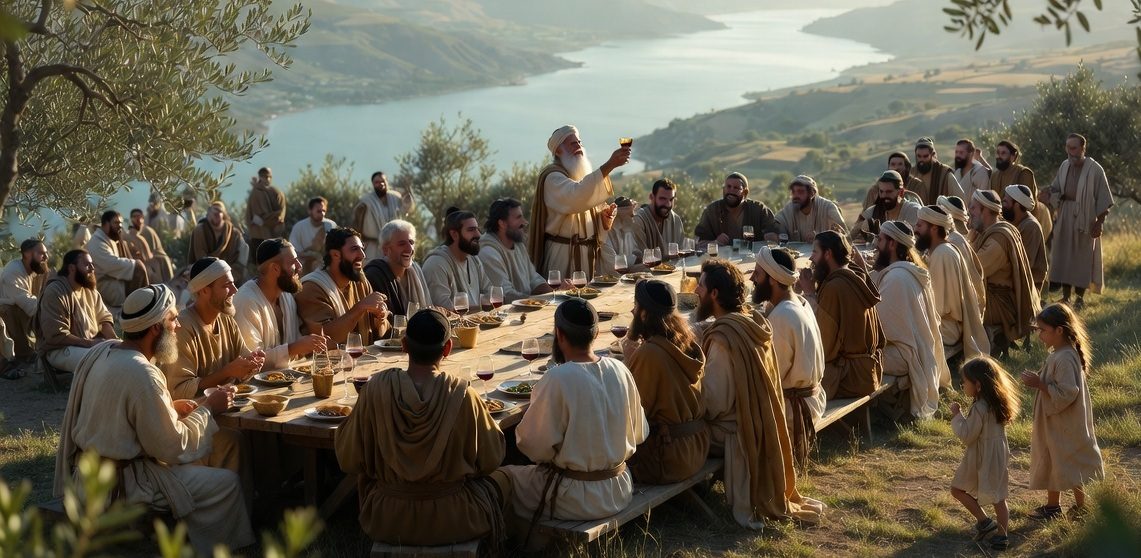
The Sages note that both carry the character of chok, statutes that invite trust in God’s wisdom beyond full explanation. The reading of parashat Parah before Nissan served as a practical reminder in Temple times. The ashes of the red heifer enabled large numbers across Israel to achieve the purity needed to travel to Jerusalem and join a chaburah (a registered group that shares one lamb) for the Passover offering. One lamb often served an entire group. The red heifer cleared the way through the shadow of death. The Passover lamb celebrated the sparing of the firstborn and the birth of the nation. Together they form a harmonious sequence for all Israel, purity leading to joyful remembrance at the altar.
Centralized Service Requires National Purity
Deuteronomy 16 adds another layer. The Passover offering takes place “in the place which the Lord shall choose” (Devarim 16:2), centering the observance in the location God designates. The red heifer is slaughtered and prepared in a specific fixed location on the Mount of Olives, directly east of and facing the entrance to the Sanctuary. This geographic tie parallels the centralized requirement for the Passover offering. The red heifer ritual, though conducted outside the camp during the wilderness period, supported the national service that would one day center in the Temple. Both elements reflect God’s provision for His people as they move from slavery to covenant life in the Land. The Hebrew terms bnei Yisrael and adat Yisrael paint a picture of unity. The entire community receives these instructions, each part contributing to the collective experience of redemption and purity. Without the ashes of the parah adumah, the nation as a whole cannot achieve the collective purity required for the altar service of the korban Pesach.
The Depth of Precision and Care
The details reveal remarkable care. The parah adumah must be completely red, never yoked, and prepared with exactness. Even the ear cartilage may not have a hole through it larger than a karshinah seed, which is much smaller than the typical bovine ear tag hole. Even those handling the ashes experience a temporary change, highlighting the unique nature of this chok. The korban Pesach requires participants to be able to eat the portion, with registration set before the slaughter. No bone is broken. These specifications create a system of beauty and order that sustained Israel for generations. They remind the people of both physical deliverance and ongoing relationship with God. In the Temple era, the red heifer ashes made possible the national observance that brought all Israel together in Jerusalem.
A Gift for All Israel
This linked system invites appreciation for the depth of the Torah. The red heifer addresses the reality of death in a world affected by it. The Passover lamb recalls the moment God spared His people and brought them out with a strong hand. For all Israel these commandments provide a path of purification and a memorial of freedom. The Hebrew text presents them as part of the rich heritage given specifically to the children of Israel, forming a foundation that has shaped worship and identity across centuries.
The precision in these statutes reflects divine wisdom. What seems mysterious at first becomes a testimony to God’s thoughtful design for His covenant people. The red heifer prepares hearts and bodies. The Passover lamb fills the night with remembrance and gratitude at the altar. Studying them side by side opens greater understanding of how the Torah guides Israel through challenges of impurity and celebrates victories of redemption on a national scale.
The interconnected chukim of the red heifer and Passover lamb continue to speak across time. They call the community to purity, to memory, and to faithfulness. In their proper place they strengthen the bond between the people and their God. The Hebrew words invite every generation of Israel to walk in this heritage with gratitude and awe. This is the enduring link the Torah establishes between the red heifer and the Passover lamb for all Israel.