

A red heifer calf named Temimah (perfect) entered the world a few weeks ago on a dairy farm in the hills of the Galilee. She displayed a strikingly pure red coat. Rabbi Azaria Ariel examined her personally soon after birth. Reports highlighted rapid healing from a standard ear tag applied shortly after delivery. This birth has ignited fresh hope among those dedicated to the restoration of the Temple service in Jerusalem.
Reports are coming in from my sources of continued momentum in preparations for the Temple. The Sanhedrin advances its work. Training programs for kohanim (priests) and Levites expand. Tens of thousands of young people commit to study and readiness for service in the House of Hashem. These steps mark real progress toward the day when the nation returns fully to the biblical system of purity and offerings. Temimah joins this wave as a symbol of hope. Many pray she becomes the first of many qualified candidates and a mother to future red heifers that meet every requirement.
Yet a central question arises from the plain text of the Bible and the detailed rulings of the Sages. Does the ear tag applied at birth already disqualify this calf from ever serving as the parah adumah (red heifer)?
The Biblical Standard for Perfection
The Bible states the requirement without ambiguity. “This is the statute of the law that the Lord has commanded, saying: Speak to the children of Israel, that they bring you a red heifer temimah (perfect), in which there is no mum (blemish), and upon which a yoke has never come.” (Numbers 19:2)
The Sages understood temimah to demand absolute wholeness. They applied the detailed laws of mum developed for other offerings to the parah adumah. These standards come directly from the everyday agricultural world of the Land of Israel. One key benchmark involves the karshinah seed from the bitter vetch plant. Multiple layers of potential disqualification now appear in the case of Temimah.
The Measure Hidden in Daily Feed
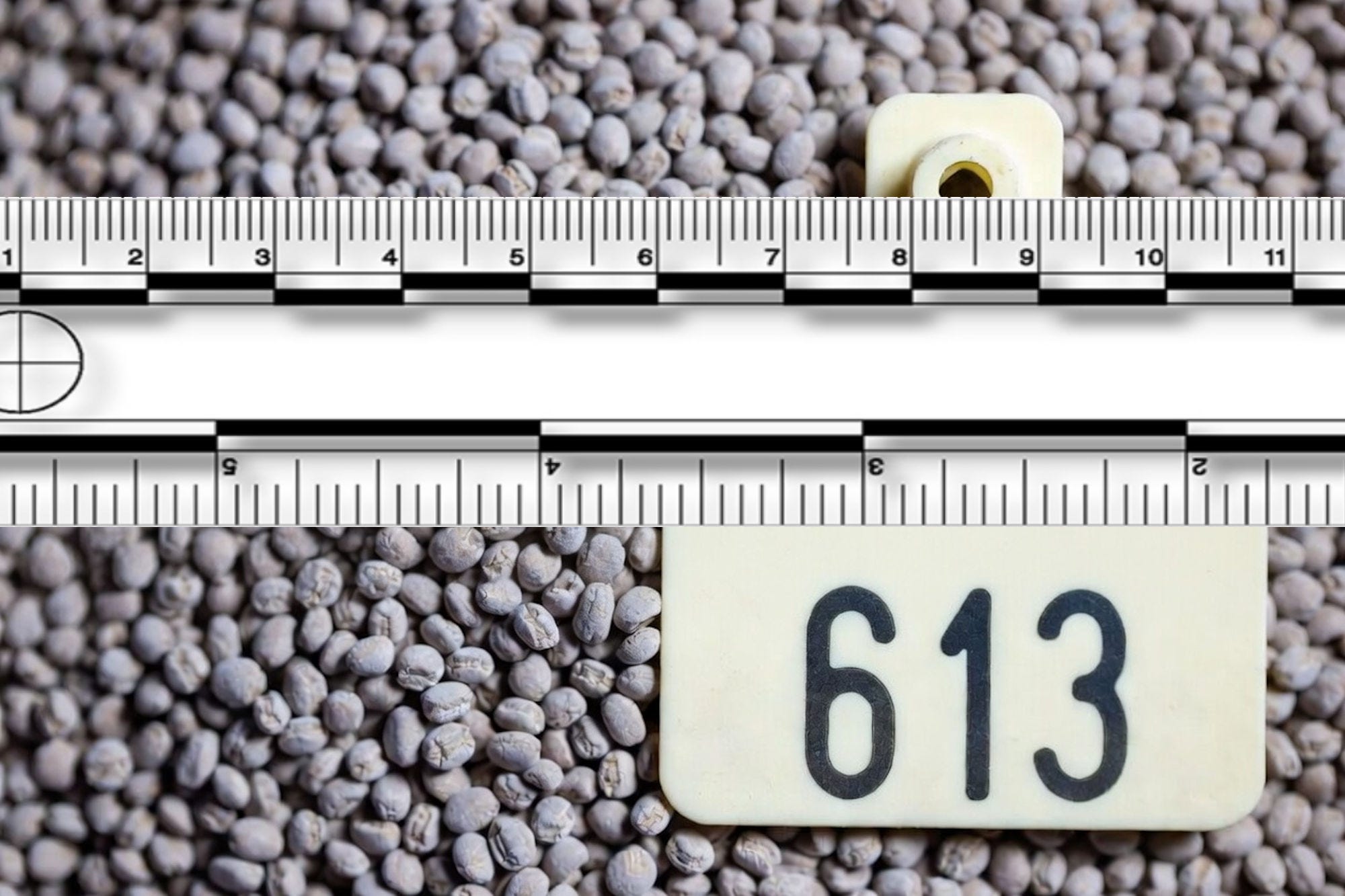
Bitter vetch, called karshinah in the Mishnah, grew as common fodder for livestock throughout the Land of Israel. Farmers fed it to cattle, including heifers. They burned the plant to produce borit karshinah, the alkaline substance used in preparing the ketoret (incense) for the Temple. The Sages chose its seed as the precise unit of measurement because every person working the land knew its size from routine handling.
Mishnah Bekhorot 6:1 records the rule: “עַל אֵלּוּ מוּמִין שׁוֹחֲטִין אֶת הַבְּכוֹר, נִפְגְּמָה אָזְנוֹ מִן הַסְּחוּס, אֲבָל לֹא מִן הָעוֹר, נִסְדְּקָה אַף עַל פִּי שֶׁלֹּא חָסְרָה, נִקְּבָה מְלֹא כַרְשִׁינָה, אוֹ שֶׁיָּבָשָׁה. אֵיזוֹ הִיא יְבֵשָׁה, כֹּל שֶׁתִּנָּקֵב וְאֵינָהּ מוֹצִיאָה טִפַּת דָּם. רַבִּי יוֹסֵי בֶּן מְשֻׁלָּם אוֹמֵר, יְבֵשָׁה, שֶׁתְּהֵא נִפְרֶכֶת.”
Translation: “For these blemishes one may slaughter the firstborn: If its ear was damaged from the cartilage but not from the skin, if it was split even though it was not lacking, if it was pierced melo karshinah (a hole full of a karshinah seed), or if it was dried out. What is dried out? Any that is pierced and does not produce a drop of blood. Rabbi Yose ben Meshullam says: dried out is one that flakes.”
The text lists separate categories. First comes damage involving the cartilage (s’chus). Then a split ear. Then the piercing clause stands independently: nikvah melo karshinah. Finally the dried out condition. The piercing rule triggers on the initial size of the hole reaching that of a karshinah seed, roughly three to five millimeters. Commercial livestock ear tags create perforations of five to eight millimeters or larger. The tool drives a pin through the ear cartilage in one motion. This exceeds the Mishnah standard at the moment of tagging.
Multiple Layers of Disqualification on Temimah
Temimah received a standard white plastic ear tag numbered 73359 shortly after birth. The tag remained for eight days before removal. Observers reported clean healing. The beit midrash (study hall) at the National Red Heifer Research Institute noted the event and placed the exact parameters of sufficient healing on its agenda for discussion.
The Mishnah addresses each potential defect distinctly. The piercing itself larger than karshinah initiates one mum. The applicator often engages the cartilage, triggering the separate cartilage damage category. The dried out condition adds another layer if the tissue loses vitality or shows flaking after the breach. These stand as independent grounds under the temimah requirement.
This parallels the yoke prohibition in Numbers 19:2. The Bible states that a yoke must never have come upon the heifer. The Sages ruled that even placing the yoke without any labor or resulting mark invalidates her. The intervention itself crosses the line. The ear tag piercing operates under the same principle of irreversible intervention. Once the hole exceeds the measure set by the Sages from the feed trough, the calf no longer qualifies as temimah. It is already too late. Multiple independent factors converge here to settle the status.
The Court Must Weigh the Cause of the Mum
Any future review by halachic authorities or a reconstituted court must address the cause of the mum directly. The initial piercing and its scale removed Temimah from consideration under the standards the Sages established in the Mishnah. The texts focus on the breach at the time it occurs, not solely on later healing. Cartilage involvement and the potential for a dried or altered state compound the issue.
This analysis does not diminish the value of ongoing study. It calls for clarity on how the Sages’ categories apply to modern farm interventions. The practical reality the Sages assumed in the Land of Israel included daily handling of karshinah fodder in the mangers. Modern efforts must align with that precision while adapting to current conditions.
A Law to Protect Future Red Heifers
Israel must establish a clear statute for all red heifer candidates born in the land. Every such calf requires examination by qualified halachic experts prior to any ear tagging. The government should cover the full costs of this process. This measure supports the national interest in restoring the Temple service and enables every Jew to fulfill his or her avodah (service) to Hashem with greater purity.
Farmers already show willingness to cooperate with research institutes. A formal protocol prevents avoidable disqualifications while upholding the exacting standards the Sages derived from the feed trough itself. Implementation would cost little compared to the national benefit. It demonstrates practical commitment to the biblical commandments that prepare the people for the Third Temple on Mount Moriah. Reforming agricultural standards around these special births ensures that future candidates avoid ordinary interventions that compromise their status from the start.
The Practical Reality the Sages Assumed
The birth of Temimah coincides with genuine advances in Temple preparation. Reports from my sources confirm the Sanhedrin continues its work. Training initiatives multiply. Youth across the country dedicate themselves to readiness. These efforts deserve full support. At the same time, precision in halachic application must match the enthusiasm.
The Sages rooted their rulings in the soil and the daily life of Israel. They selected the karshinah seed from the very fodder fed to heifers as the measure of perfection. They listed cartilage damage, splitting, piercing, and drying as separate disqualifiers because they understood the vulnerabilities of living animals in the barn and field. Modern restoration efforts succeed only when they honor that same concrete reality.
The ear tag on Temimah serves as a reminder. Ordinary farm procedures that seemed routine now stand exposed against the ancient text. The initial piercing exceeded melo karshinah. It likely engaged the cartilage. Healing does not undo the act under the criteria the Sages established. With safeguards in place, the next red heifer can emerge fully temimah, ready to provide the ashes that purify the nation and advance the redemption. The students and scholars who devote their days to these texts must also close their books and head to the farms of the Land of Israel. There they will encounter the practical, everyday realities behind the very laws they study, from the karshinah fodder in the manger to the vulnerabilities of a newborn calf’s ear.
The path forward lies in faithful adherence to the sources. The karshinah in the feed trough held the answer all along. Recognizing it now accelerates the day when Israel stands pure before Hashem in the rebuilt Temple. Practical reform in how red cows are handled at birth turns hope into tangible readiness.